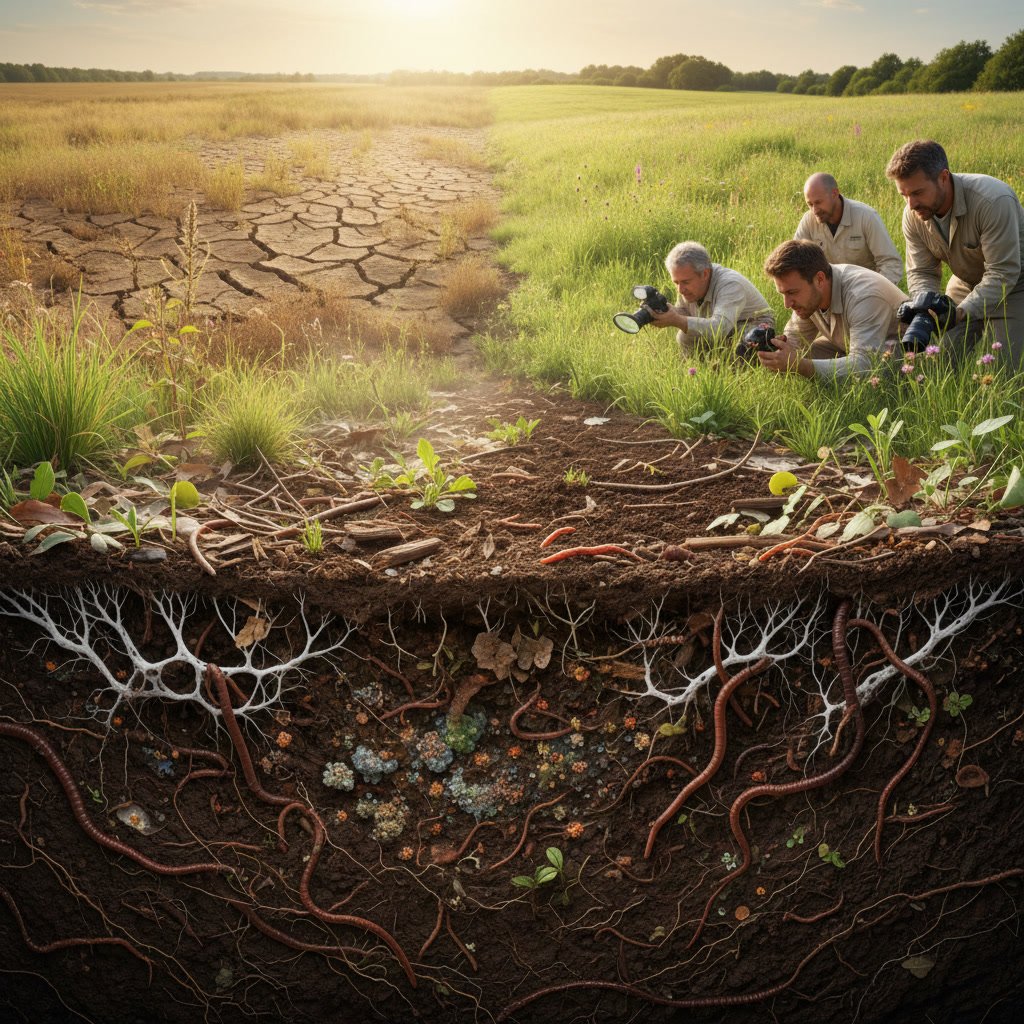
When failed soil biology prevents roots from accessing water and nutrients efficiently, irrigation systems must run longer, more frequently, and at higher volumes just to keep plants marginally alive. Healthy soil biology creates aggregates and pore spaces that allow water to penetrate deeply and remain accessible to roots, but degraded biology results in compacted, hydrophobic, or waterlogged conditions that no amount of watering can fix. Your irrigation system becomes a life support machine rather than a maintenance tool, masking the real problem while your water bills climb and plant health continues to decline.
How Healthy Soil Biology Manages Water
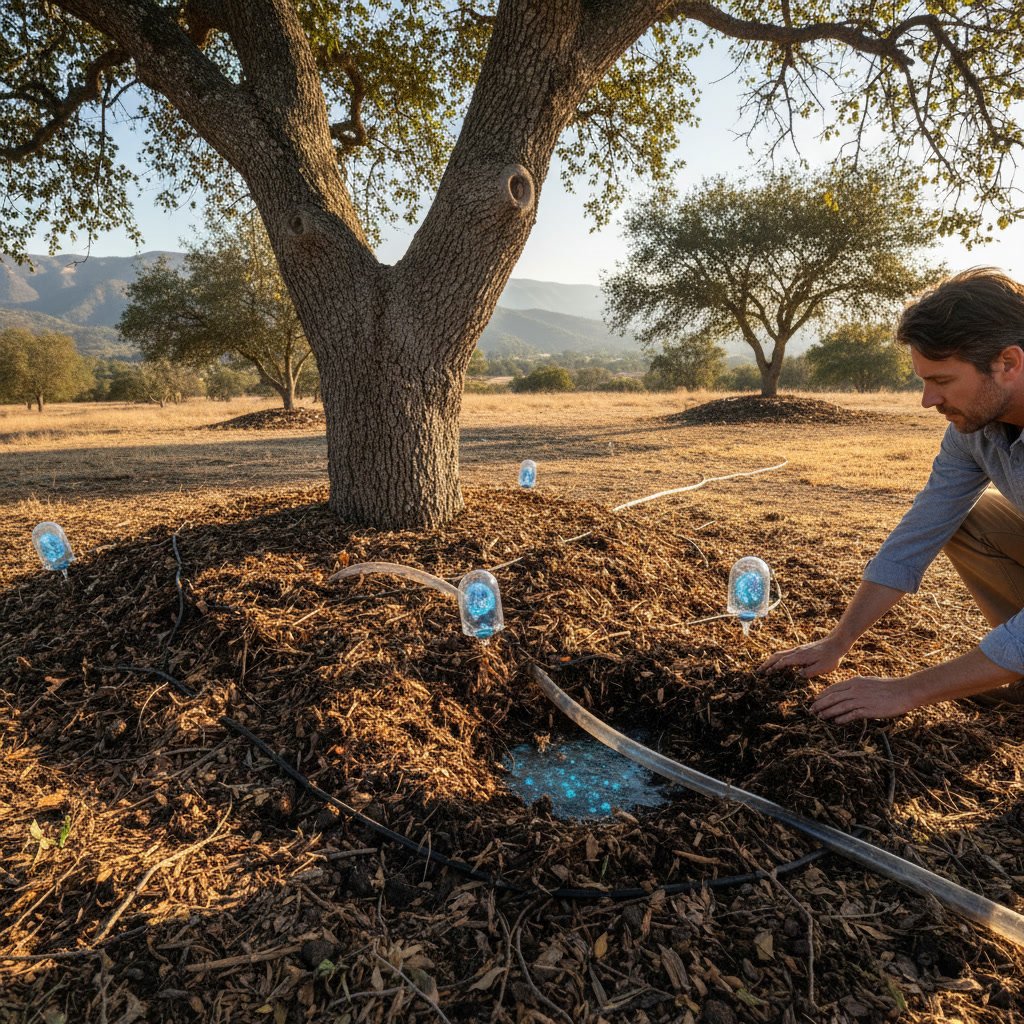
Living soil contains billions of microorganisms that build structure, create channels, and produce compounds that help water infiltrate and remain available. Mycorrhizal fungi extend root reach by up to 100 times, while bacteria produce biofilms and polysaccharides that bind soil particles into stable aggregates. These aggregates create the pore spaces that allow water to move vertically, drain excess moisture, and hold the right amount for plant use.
When this biological system functions properly, irrigation water penetrates to root zones within minutes and remains accessible for days or weeks, depending on soil texture. Roots grow deep and wide, tapping into moisture reserves that shallow, struggling roots in degraded soil never reach. A thriving biological community means you water less often and plants perform better during dry periods.
The Hidden Cost of Biological Collapse in San Diego County
Southern California’s combination of low rainfall, alkaline soils, and intensive landscaping creates conditions where soil biology can collapse rapidly. Once the living community dies off, soil structure fails, and irrigation systems must compensate by delivering water that either runs off the surface, pools in shallow zones, or drains away before roots can use it.
Property owners across the region unknowingly spend thousands of dollars on increased water use, controller adjustments, and plant replacements without addressing the underlying cause. The irrigation system appears to be functioning, yet plants show stress, disease pressure increases, and certain areas never seem to get enough moisture no matter how long the system runs.
Your Timer Settings Keep Increasing
One of the clearest signals that soil biology has failed is the steady creep of run times. What started as 10 minutes per zone becomes 15, then 20, then multiple cycles per day. You adjust settings not because the weather changed dramatically, but because plants show stress unless you increase duration or frequency.
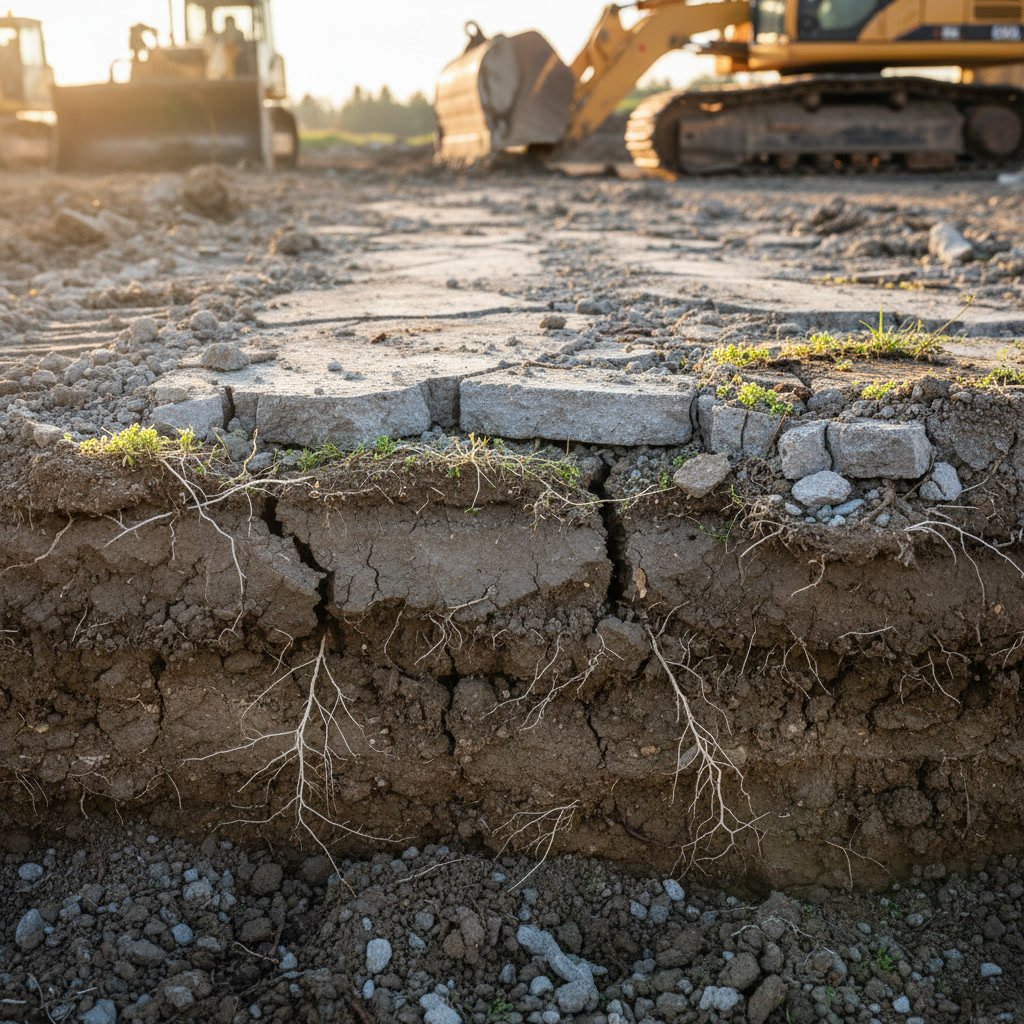
This pattern indicates that water no longer penetrates or remains available the way it should. Compacted soil with no biological activity forms a barrier that water struggles to cross. Even when moisture reaches the root zone, the lack of organic matter and microbial biomass means the soil cannot hold it, and irrigation must run constantly to prevent wilting.
Water Pools on the Surface or Runs Off Immediately
Healthy soil absorbs water quickly because pore spaces and biological channels guide it downward. When you notice puddles forming within seconds of irrigation starting, or water streaming down slopes and driveways before it can soak in, the soil has lost its infiltration capacity.
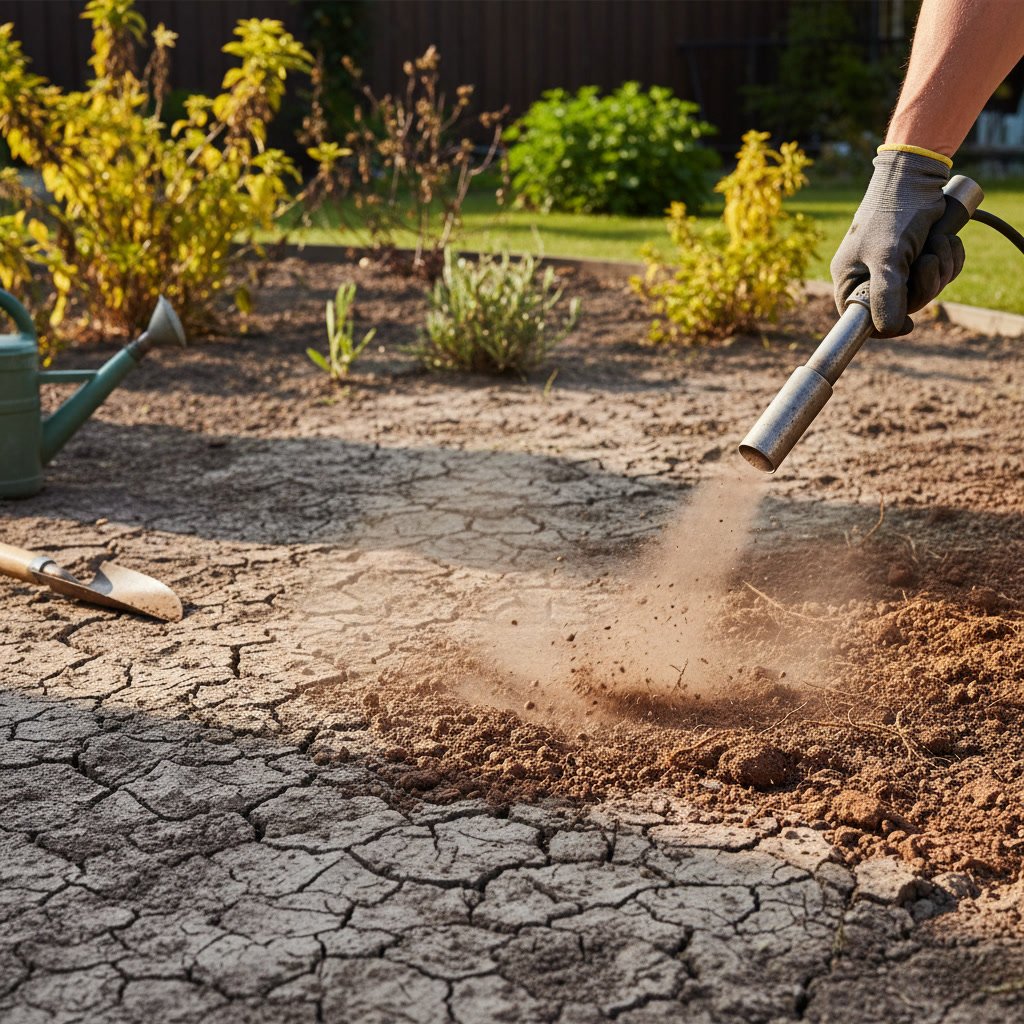
This condition, often called hydrophobic soil, develops when microbial populations crash and organic matter breaks down into waxy compounds that repel water. In other cases, bacterial colonies that once produced sticky substances to bind soil particles have died, causing structure to collapse into a concrete-like surface layer. No amount of additional watering will solve the problem because the water simply cannot enter the soil profile.
Plants Wilt Between Irrigation Cycles Despite Frequent Watering
If plants droop or show drought stress just hours or a day after irrigation, the soil is not holding moisture in the root zone. Degraded soil biology means no aggregates, no organic sponges, and no fungal networks to extend the reach of roots. Water drains straight through sandy soils or sits in isolated pockets in clay, unavailable to the plants that need it.
You respond by increasing frequency, but the plants continue to struggle because the fundamental water-holding capacity has been destroyed. This cycle is especially common in turf areas, ornamental beds, and around trees where Airspade Soil Decompaction can reveal dense, lifeless soil zones that irrigation cannot remedy on its own.
Uneven Moisture Distribution Across the Same Zone
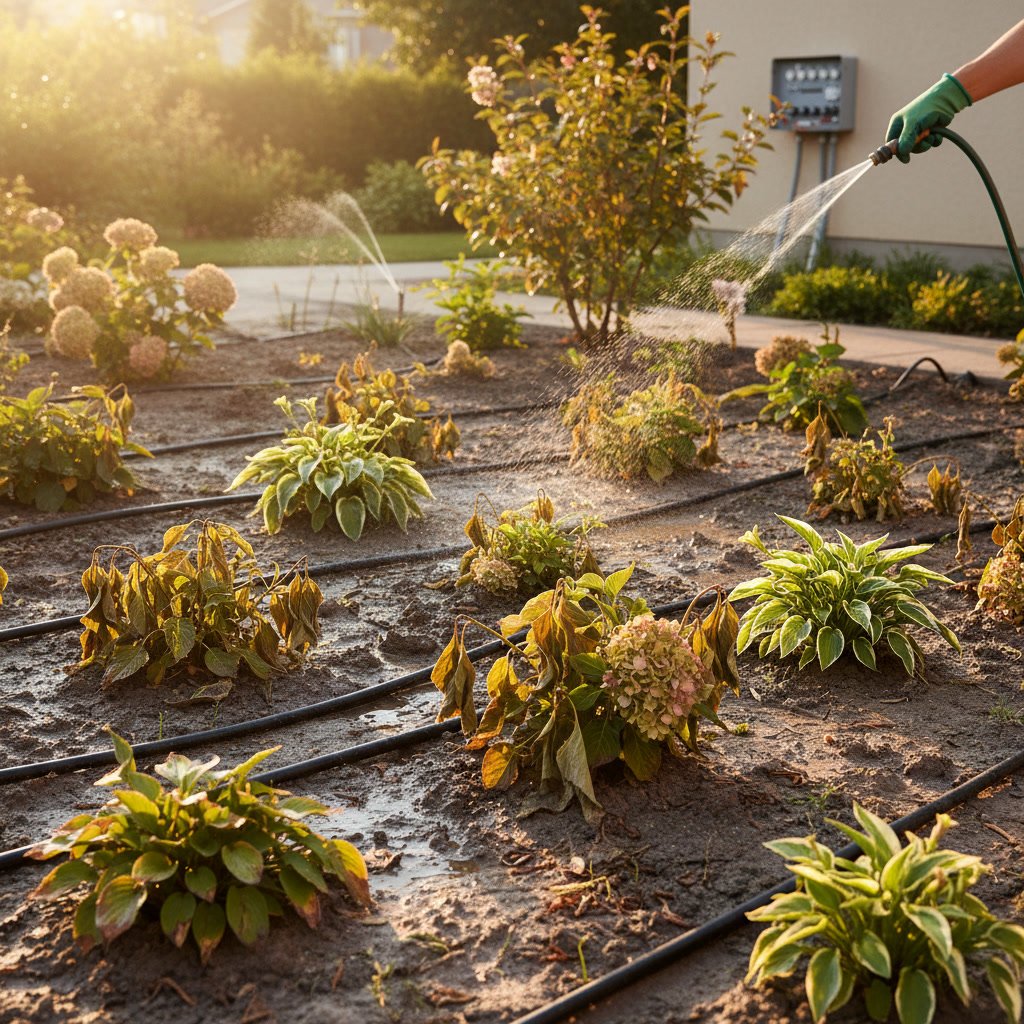
When some plants in a zone appear overwatered while others remain dry, despite uniform sprinkler coverage, soil biology has likely degraded unevenly. Compacted areas with no microbial activity become waterlogged because water cannot drain, while nearby sections with hydrophobic conditions stay bone dry.
This patchwork of wet and dry spots forces you into impossible choices: water enough for the dry areas and drown the wet ones, or under-water to avoid flooding and watch the dry zones decline further. The irrigation system is not malfunctioning, but the soil beneath it no longer behaves as a consistent medium.
Five Physical Symptoms That Confirm the Problem
Beyond irrigation behavior, several visible and tactile clues reveal that soil biology has failed and your system is compensating:
- Soil surface feels hard and crusted, requiring force to insert a screwdriver or probe more than two inches deep.
- Visible salt crusts or white deposits appear on the soil surface, indicating poor drainage and accumulation of minerals that healthy biology would process.
- Root zones smell sour or anaerobic when exposed, a sign of waterlogged conditions and the absence of aerobic microbial activity.
- Earthworms are absent, even in beds that receive regular organic mulch, showing that the biological community cannot support even the hardiest decomposers.
- Organic mulch remains intact on the surface for months without breaking down, because the fungi and bacteria that decompose it are no longer present in functional numbers.
These physical symptoms, combined with irrigation behavior changes, confirm that Rebuilding Biology is necessary to restore normal soil function and allow your irrigation system to return to efficient operation.
The Irrigation System Cannot Fix What Biology Should Do
Modern controllers, smart timers, and soil moisture sensors can optimize delivery, but they cannot create the pore spaces, fungal networks, and microbial communities that make soil functional. When property owners rely solely on irrigation technology to solve what is fundamentally a biological failure, they invest in equipment that compensates for a problem rather than resolving it.
Expert-level insight: the most advanced irrigation system will fail to maintain plant health in biologically dead soil because water availability is not just about delivery, it is about retention, distribution, and root access at the microscopic level. Restoring the living community is the only path to reducing water use while improving plant performance.
Why Soil Compaction and Biological Failure Go Hand in Hand
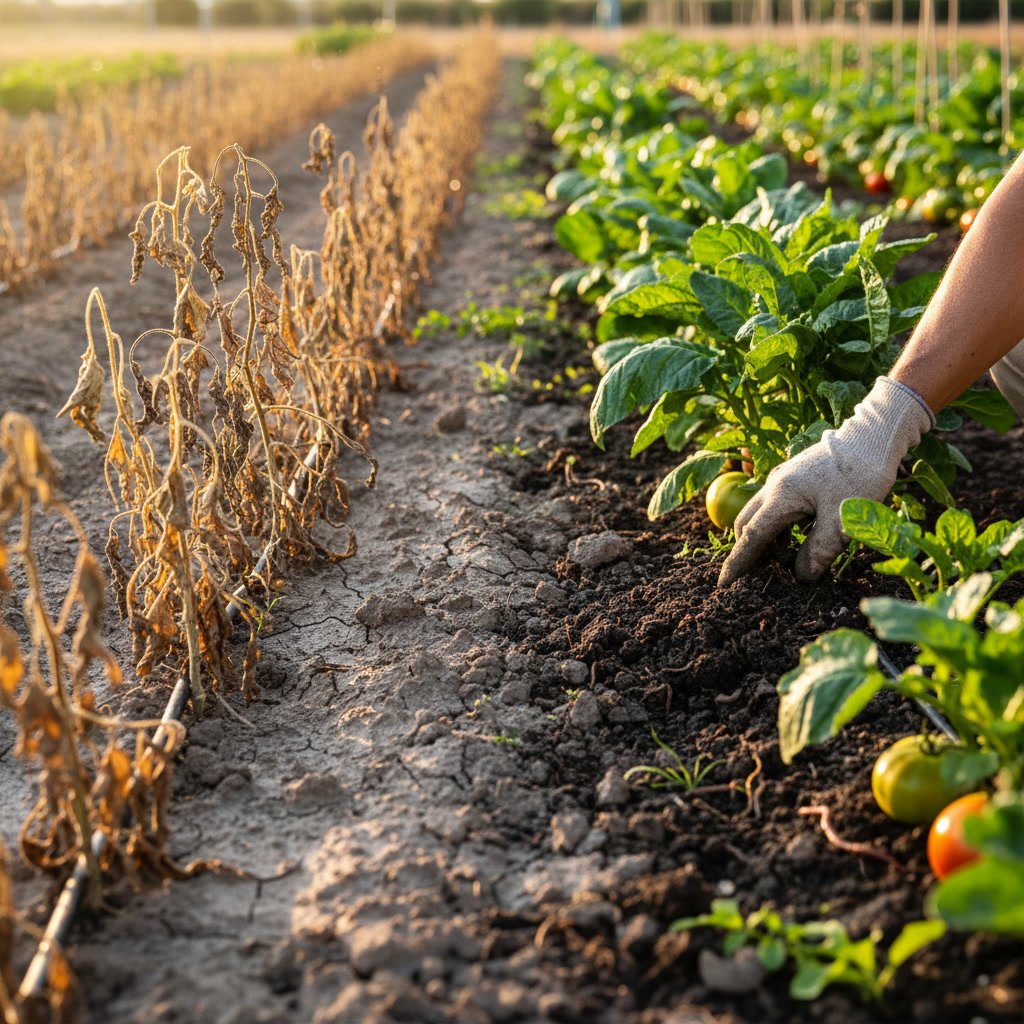
Compacted soil lacks the oxygen that aerobic microbes require, causing populations to crash. Once biology dies off, nothing remains to produce the glues, slimes, and root exudates that hold soil particles apart and maintain structure. The soil collapses further, creating a feedback loop where compaction kills biology and the absence of biology worsens compaction.
This is why mechanical intervention alone often fails. Tilling or aerating compacted soil provides temporary relief, but without reintroducing and nurturing the microbial community, structure collapses again within weeks or months. Effective restoration requires both physical decompaction and biological inoculation, supported by organic amendments that feed the recovering community.
How to Confirm Your Soil Has Lost Its Biological Function
Simple field tests can reveal whether your irrigation challenges stem from failed biology. Dig a small test hole six inches deep and fill it with water. In healthy soil, the water should drain within 10 to 30 minutes. If it drains in seconds, biology has failed to create water-holding aggregates. If it remains pooled after an hour, compaction and anaerobic conditions have taken over.
Another test involves examining root systems. Healthy soil encourages roots to grow deep and spread wide. If roots are shallow, circling, or confined to the original planting hole years after installation, the surrounding soil is biologically inactive and roots cannot colonize it. For more guidance on identifying these conditions, refer to signs your soil needs restoration.
Restoring Biology Reduces Irrigation Demand Permanently
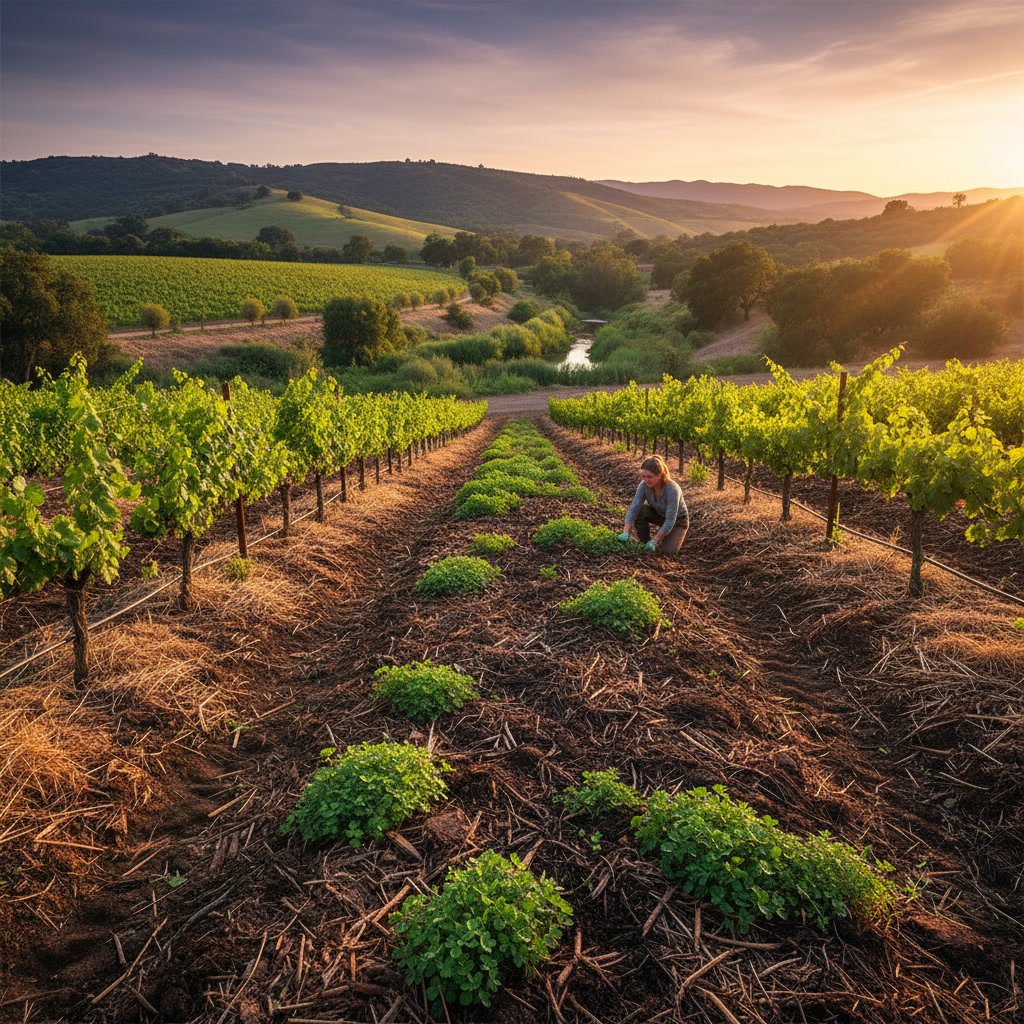
Once soil biology rebuilds, water infiltration improves, retention increases, and root systems expand into previously inaccessible zones. Irrigation run times can often be reduced by 30 to 50 percent within the first growing season, and plants show improved stress tolerance, color, and growth rates. The system shifts from compensating for failure to supporting thriving plants.
This transformation is not immediate and requires a structured approach that addresses compaction, reintroduces microbial diversity, and provides the organic matter and minerals that sustain recovery. SD SOIL AND SOUL LLC specializes in this process, using science-based methods to restore function rather than mask symptoms. Property owners in Rancho Santa Fe and Carlsbad have seen measurable improvements in both plant health and water efficiency following targeted soil restoration.
Moving Beyond Irrigation Adjustments to Real Solutions
Your irrigation system reveals the health of the soil beneath it. When run times climb, water pools or runs off, and plants struggle despite constant moisture, the problem is not the controller or the sprinkler heads. The living community that makes soil functional has collapsed, and no amount of watering will restore it.
Addressing the root cause through biological restoration reduces water waste, lowers maintenance costs, and creates landscapes that perform the way they should. Understanding how soil biology rebuilding works provides the foundation for making informed decisions that deliver lasting results.
SD SOIL AND SOUL LLC offers targeted soil restoration services that rebuild the biological systems your landscape depends on. If your irrigation system is working harder every season with diminishing results, a professional assessment can identify the specific conditions driving the problem and map a path to recovery. Call +17609357256 to schedule a consultation and learn how restoring soil biology can reduce irrigation demand and improve plant health across your property.