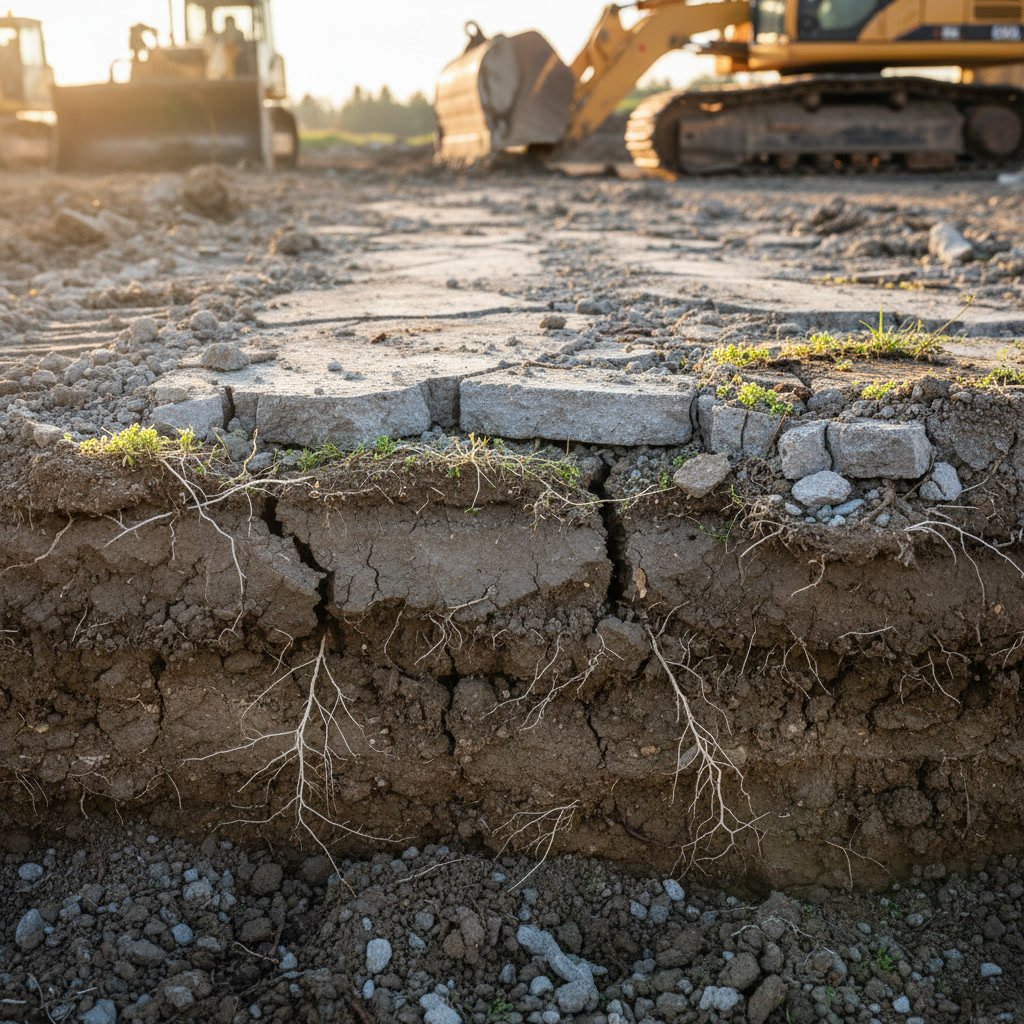
Construction damage soil structure through three primary mechanisms: heavy equipment compaction, biological disruption, and chemical contamination. When bulldozers, trenchers, and construction vehicles cross a landscape, soil loses up to 90% of its pore space, suffocating root systems and collapsing the microbial networks that keep plants alive. Biological restoration reverses this damage by reintroducing living organisms, rebuilding soil architecture, and restoring oxygen flow without replacing tons of expensive topsoil.
Why Healthy Soil Requires Both Structure and Biology
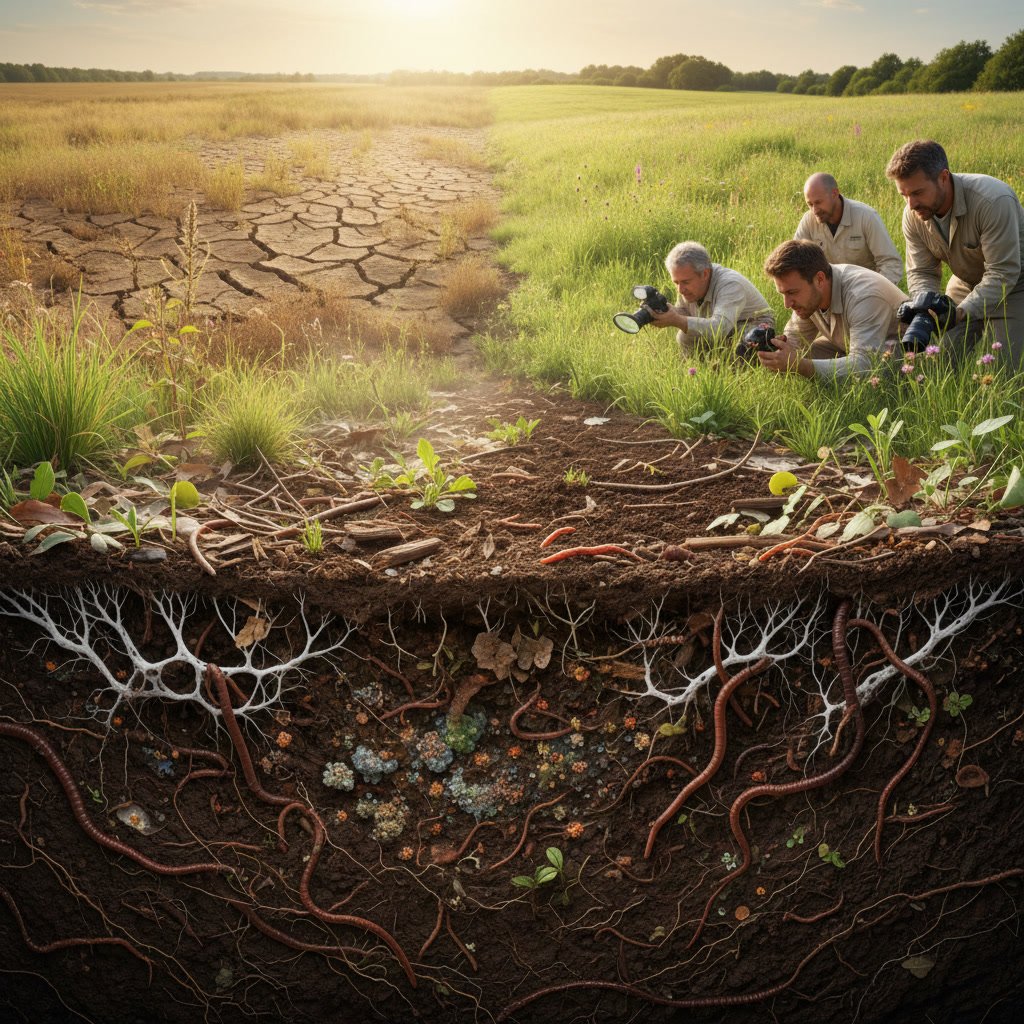
Soil is not inert dirt. It functions as a living ecosystem where billions of bacteria, fungi, and microarthropods create pathways for air, water, and nutrient exchange. The physical arrangement of mineral particles, organic matter, and pore spaces forms what soil scientists call aggregate structure. When construction equipment rolls across a yard or staging area, the weight crushes these aggregates into a dense, airless mass.
Roots need oxygen just as much as water. Compacted soil cuts off oxygen supply, causing root dieback within weeks. Trees and palms planted in disturbed soil struggle for years or die outright because their roots cannot penetrate the hardened layer. Homeowners often assume their irrigation system is failing when the real problem lies buried beneath the surface.
The Three Stages of Construction Impact
Construction activities damage soil in overlapping phases. During demolition and grading, topsoil is scraped away or buried under fill material. The nutrient-rich upper layer, built over decades, disappears in an afternoon. Subsoil, which contains fewer nutrients and less organic matter, becomes the new surface.
Heavy machinery then compacts the remaining soil. A single pass from a loaded dump truck can compress soil to half its original depth. Repeated trips create layers so dense that water pools on the surface instead of infiltrating. Developers sometimes grade a property multiple times, compounding the damage with each pass.
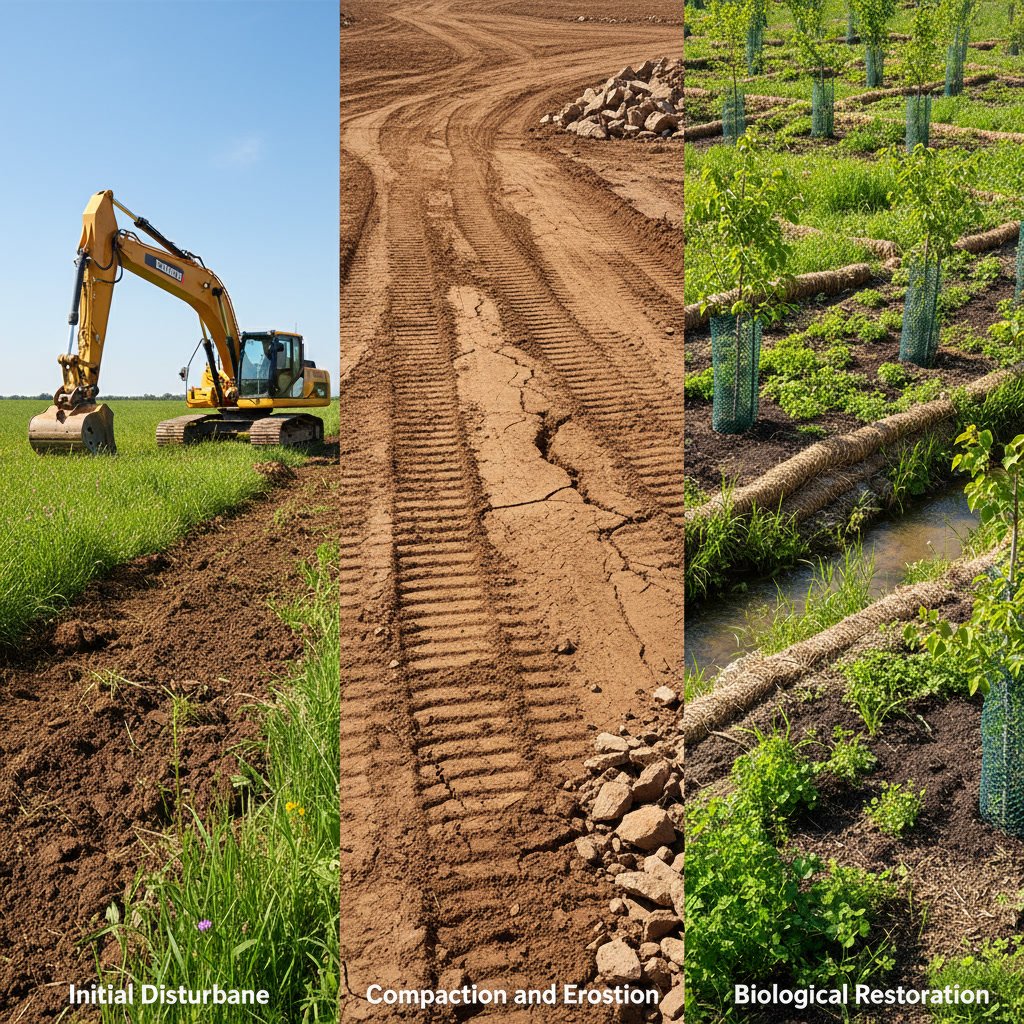
Finally, construction materials introduce contaminants. Concrete washout raises pH levels. Paint thinners and fuels kill soil microbes. Even lumber treated with preservatives leaches copper and arsenic into the ground. These chemical residues persist for years, creating hostile conditions for beneficial organisms.
How Compaction Destroys Soil Pore Networks
Soil pores fall into two categories: macropores and micropores. Macropores, the larger spaces between soil particles, allow water drainage and air movement. Micropores hold water for plant use. Healthy soil maintains a balance between the two, typically 50% solid particles and 50% pore space.
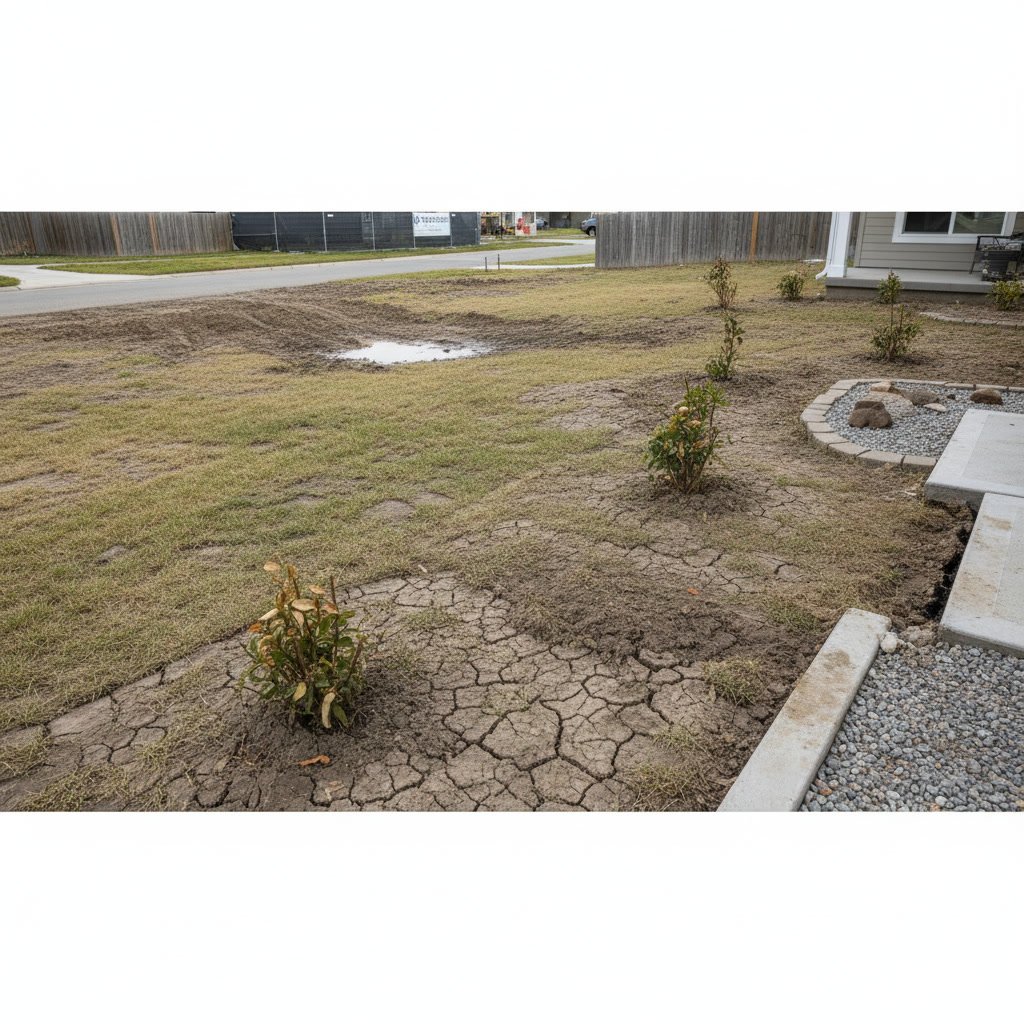
Compaction eliminates macropores first. When pore space drops below 30%, drainage stops. Water sits on the surface, creating muddy conditions in winter and cracked, impenetrable crusts in summer. Roots attempting to grow through compacted soil expend more energy pushing through the barrier than they gain from the nutrients on the other side.
The damage extends vertically in layers. Surface compaction from foot traffic creates a crust one to two inches deep. Vehicle traffic compresses soil 12 to 18 inches down. Trenching equipment and foundation work can create compacted zones extending three feet or more below grade. Each layer blocks water and root penetration differently, creating complex drainage problems that defy simple solutions.
Why Soil Biology Collapses After Construction in San Diego County
Soil microbes require oxygen, moisture, and organic matter to survive. Construction disrupts all three. When equipment compacts soil, oxygen levels plummet. Aerobic bacteria, which dominate healthy soil, die off within days. Anaerobic organisms that thrive in low-oxygen environments take over, producing compounds toxic to plant roots.
The fungal networks that connect plant roots to nutrients also collapse. Mycorrhizal fungi form symbiotic relationships with tree and palm roots, extending the root system’s effective reach by a factor of 100 or more. A single pass from heavy equipment severs these delicate fungal threads. Reestablishing the network naturally can take five to ten years, if it happens at all.
Organic matter decomposition stops in compacted soil. Dead leaves, root fragments, and other organic material that would normally feed soil organisms accumulate on the surface or form a matted, anaerobic layer. Without active decomposition, nutrient cycling halts. Plants exhibit deficiency symptoms even when chemical fertilizers are applied because the biological mechanisms that make nutrients available no longer function.
Common Signs Your Property Suffered Construction Compaction
Water pooling in areas that previously drained well indicates compaction below the surface. If puddles persist 24 hours after rain or irrigation stops, the soil has lost its infiltration capacity. This symptom often appears in former staging areas, equipment paths, and anywhere vehicles made repeated trips.
Established trees showing sudden decline two to three years after nearby construction suffered root damage from compaction. The delay occurs because trees draw on stored reserves before symptoms appear. Canopy thinning, undersized leaves, and branch dieback signal root stress from oxygen-deprived soil.
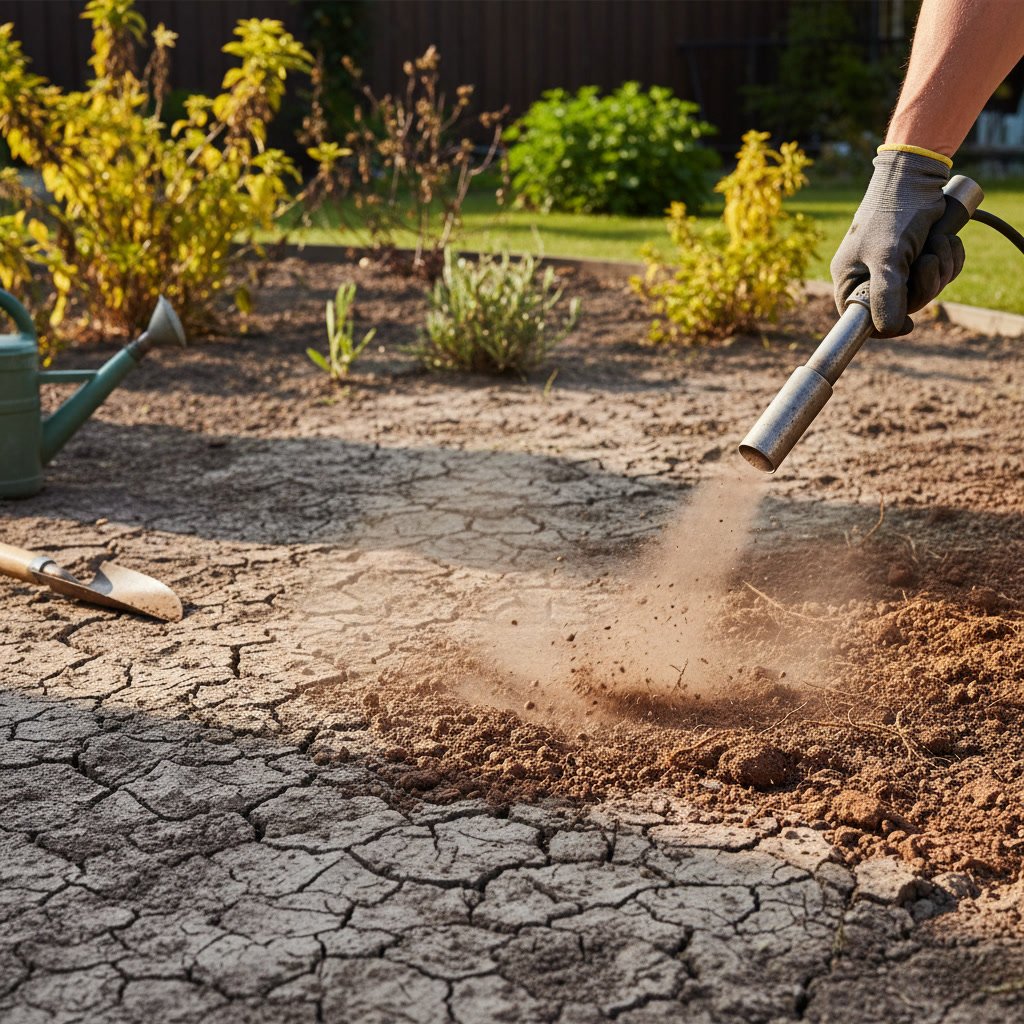
Hard, crusty soil that resists a shovel or soil probe points to severe compaction. Healthy soil yields to moderate hand pressure. If you need a pickaxe to dig a planting hole, construction likely compressed the soil beyond the point where roots can penetrate. This condition appears most often in areas where fill dirt was placed and then driven over repeatedly.
How Biological Restoration Rebuilds Soil Structure
Biological restoration focuses on reintroducing and supporting soil organisms that naturally create soil structure. Unlike mechanical tillage, which provides temporary relief but destroys remaining biology, biological methods work with natural processes to build lasting improvements.
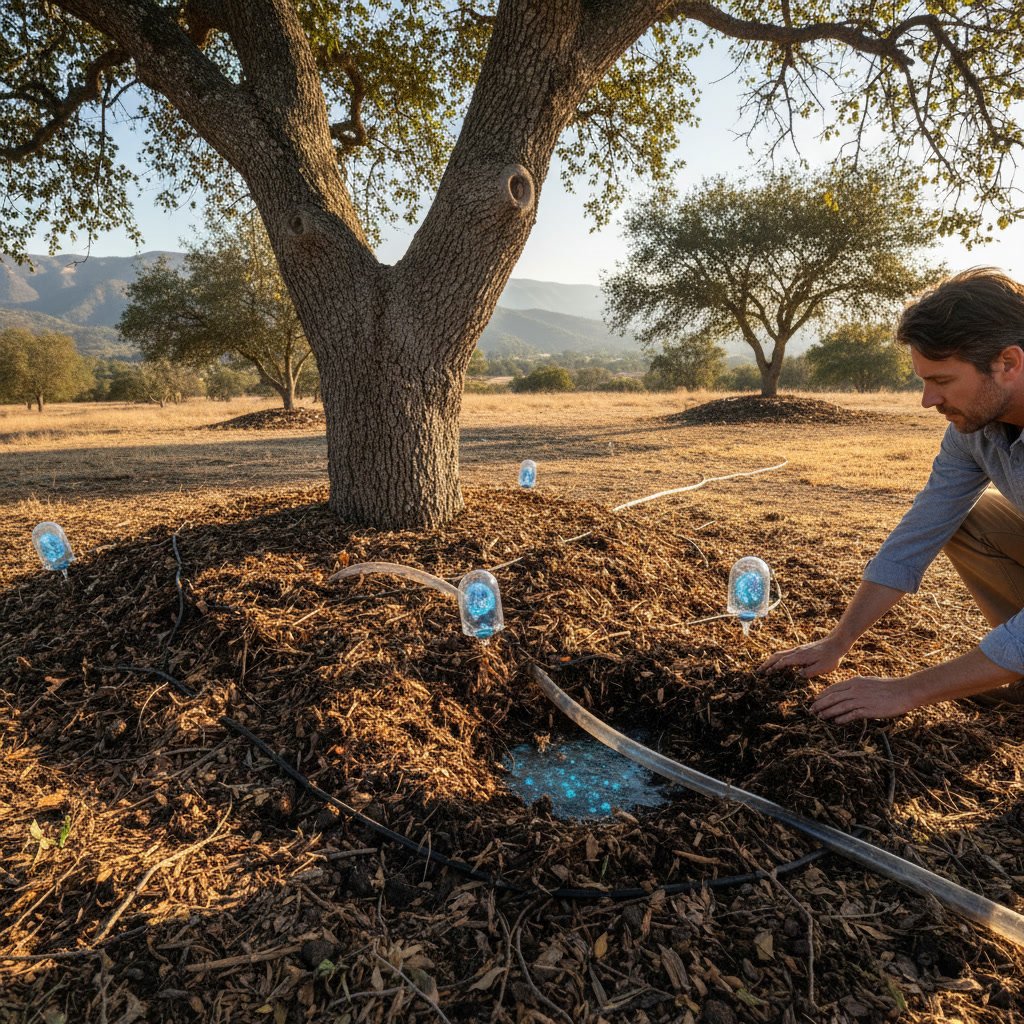
The process begins with Airspade soil decompaction, a technique that uses high-velocity air to fracture compacted layers without damaging roots. The Airspade creates fissures and channels through the hardpan, restoring air and water flow immediately. These channels serve as pathways for roots and provide habitat for soil organisms to recolonize damaged zones.
Once physical barriers are reduced, microbial inoculants introduce beneficial bacteria and fungi. These organisms begin decomposing organic matter, producing sticky compounds called glomalin and polysaccharides that bind soil particles into new aggregates. As aggregates form, pore space returns and soil structure improves. The process mirrors natural soil development but occurs in months rather than decades.
Compost applications provide both food and habitat for recovering microbial populations. A two-inch layer of quality compost supplies carbon, nitrogen, and trace minerals while creating a moisture-retentive blanket that moderates soil temperature. Microbes multiply rapidly in the compost layer, then migrate downward into the mineral soil as conditions improve.
The Role of Fungal Networks in Structural Recovery
Mycorrhizal fungi contribute directly to soil aggregation. Fungal hyphae, thread-like structures finer than human hair, wind through soil particles and excrete glomalin, a glue-like protein that cements particles into stable aggregates. These aggregates resist compaction far better than individual particles, creating a self-reinforcing improvement cycle.
Reestablishing mycorrhizal networks requires live fungal inoculant applied directly to root zones. Spores alone rarely germinate in disturbed soil. Live cultures, introduced during soil decompaction procedures, colonize roots within weeks. Once established, the fungi extend rapidly, covering square feet per day under favorable conditions.
The benefits extend beyond structure. Mycorrhizal fungi access phosphorus, zinc, and copper locked in soil minerals, transferring these nutrients to plant roots in exchange for sugars. Trees and palms growing with active mycorrhizal associations show improved drought tolerance, disease resistance, and growth rates compared to plants in sterile or damaged soil.
Why Chemical Amendments Cannot Replace Living Biology
Gypsum, lime, and synthetic fertilizers address specific soil chemistry problems but do nothing to restore biological function. Gypsum flocculates clay particles, improving structure temporarily, but without living organisms to maintain the improvement, soil reverts to compaction within a growing season. Gypsum cannot create the sticky organic compounds that hold aggregates together long-term.
Synthetic fertilizers often worsen biological damage. High-salt formulations kill sensitive microbes and earthworms. Plants growing on synthetic nutrition alone develop shallow, dependent root systems instead of the deep, extensive networks that characterize biologically active soil. The cycle of application and dependency continues indefinitely without addressing the underlying structural and biological deficits.
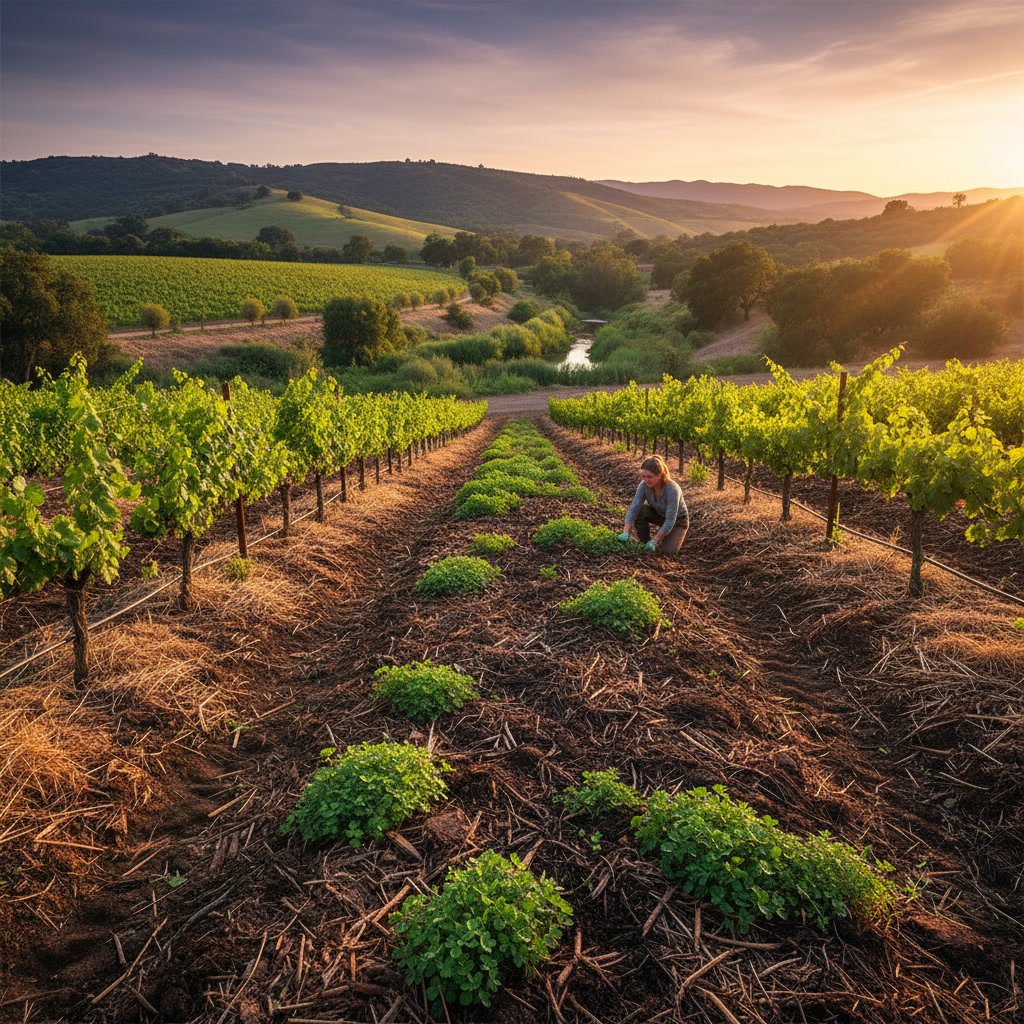
Biological approaches build soil capital that appreciates over time. Each year, microbial populations expand, organic matter accumulates, and soil structure improves. Properties that invest in rebuilding biology see compounding returns as healthier soil supports healthier plants, which contribute more organic matter back to the soil, feeding the next generation of beneficial organisms.
Restoration Timelines and What Property Owners Should Expect
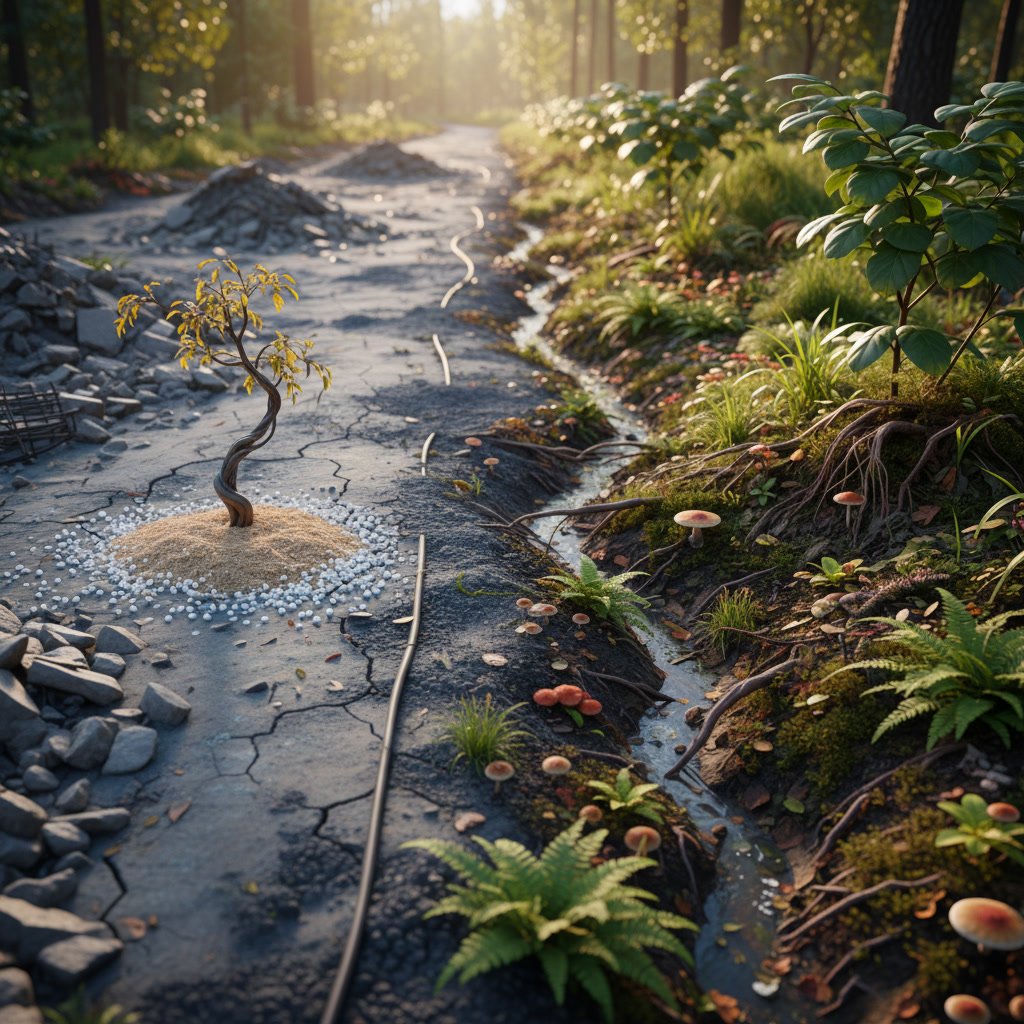
Severe compaction in areas like Rancho Santa Fe or Poway requires 12 to 18 months for meaningful biological recovery. Initial improvements appear within weeks as decompaction restores drainage and oxygen flow. Microbial populations rebound in two to three months, visible as increased earthworm activity and faster breakdown of surface organic matter.
Root growth into treated zones takes six to nine months. Trees and palms extend fine feeder roots cautiously, testing conditions before committing energy to extensive growth. Once roots establish in the restored soil, canopy improvements follow. Leaf size increases, color deepens, and new growth accelerates as nutrient and water uptake improves.
Long-term monitoring shows continued improvement for three to five years post-treatment. Soil organic matter climbs from typical disturbed levels of one to two percent toward healthy benchmarks of four to six percent. Aggregate stability increases, reducing susceptibility to re-compaction. Properties that maintain biological health through ongoing expert plant health care achieve soil conditions superior to pre-construction baselines.
Preventing Future Damage During Landscape Projects
Protection zones around existing trees and palms should extend to the drip line minimum, farther for large specimens. Temporary fencing keeps equipment and materials out of root zones. Even light foot traffic during construction causes measurable compaction, so enforcing exclusion zones protects years of biological development.
Stockpiling topsoil separately from subsoil preserves valuable biological resources. The top six inches contains the majority of beneficial organisms and organic matter. Scraping this layer aside before grading, then replacing it after construction, maintains microbial populations and reduces recovery time. Mixing topsoil with subsoil dilutes biology and creates inferior growing conditions throughout the profile.
Specifying equipment limitations in contracts gives property owners leverage. Tracked vehicles distribute weight more evenly than wheeled equipment, reducing compaction. Limiting work to dry soil conditions prevents the severe compaction that occurs when saturated soil is driven over. These simple specifications make the difference between minor disturbance and years of expensive remediation.
Restoring Your Landscape Starts Below the Surface
Construction creates soil damage that cosmetic fixes cannot address. Biological restoration rebuilds the living ecosystem that healthy landscapes require, creating conditions where trees, palms, and plants thrive instead of merely survive. The investment pays dividends in reduced water use, eliminated chemical dependency, and landscapes that improve year after year instead of declining.
SD SOIL AND SOUL LLC specializes in reversing construction impact through science-based soil biology restoration. Whether your property shows obvious damage or subtle decline following building activity, professional assessment identifies the specific biological and structural deficits limiting your landscape. Restoration protocols tailored to Southern California conditions rebuild soil health from the root zone up, creating the foundation for long-term plant vitality. Call (760) 935-PALM to schedule a comprehensive soil evaluation and learn how biological methods can restore what construction damaged.