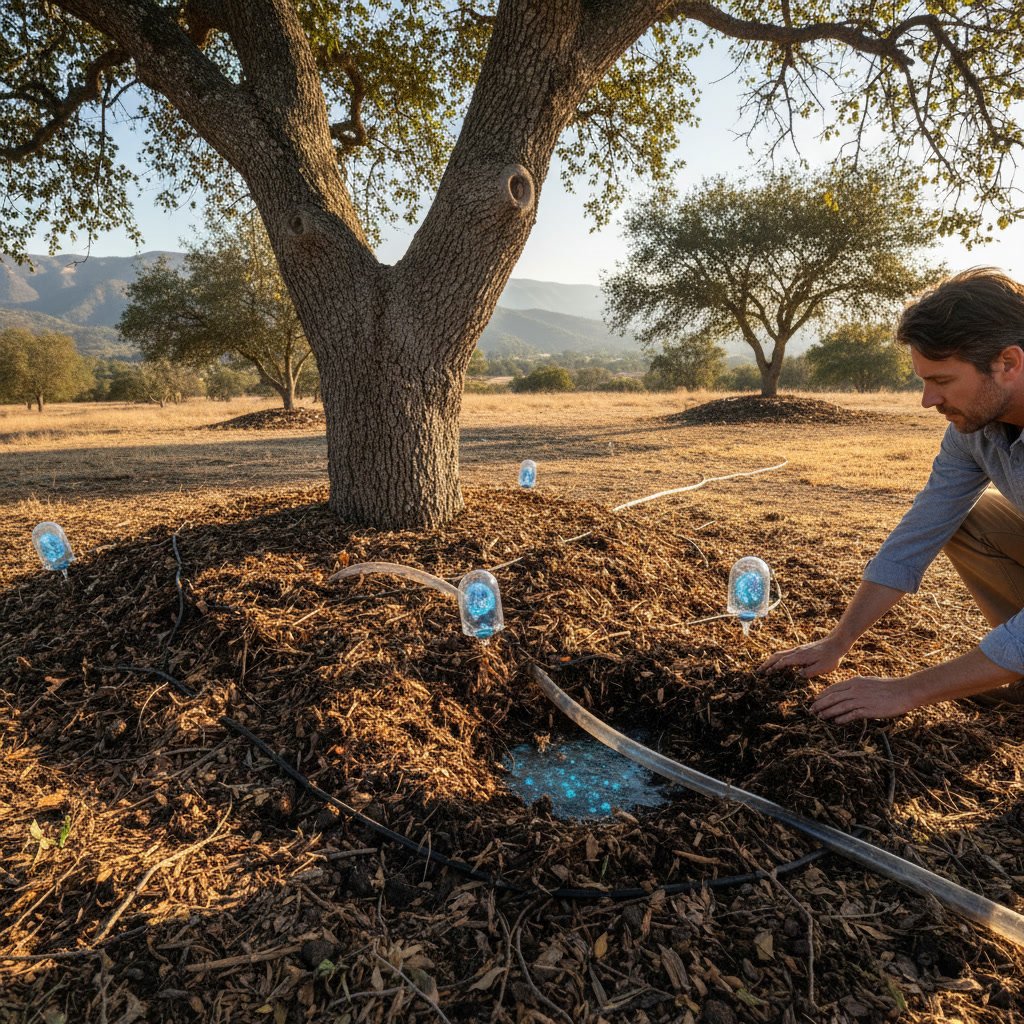
Established trees face mounting stress during fire season when dry conditions push moisture levels to dangerous lows. The most effective defense does not come from surface mulch or extra irrigation alone, but from rebuilding soil moisture retention biology, the living network of microorganisms and fungi that hold water in the root zone and deliver it efficiently to trees. Healthy soil biology can store three to five times more moisture than degraded soil, giving mature trees the hydration reserves they need to maintain thick, fire-resistant bark and vigorous canopy health when fire danger peaks.
Why Fire Season Puts Maximum Stress on Tree Root Systems
Southern California fire season arrives when soil temperatures climb, humidity drops, and evaporation rates soar. Established trees cannot relocate their roots to chase moisture. They depend entirely on the soil immediately surrounding their root network. When that soil loses its ability to capture and hold water, trees enter drought stress even if irrigation runs regularly. Drought-stressed trees produce less sap, thin their bark, and shed foliage, all of which increase fire vulnerability.
Most property owners assume irrigation volume is the answer. They increase run times and frequency, hoping more water will solve the problem. But degraded soil biology creates a paradox: water runs through compacted or biologically dead soil without being absorbed, leaving roots dry while runoff increases. The solution lies not in more water, but in rebuilding the biological structures that capture it.
How Living Soil Holds Moisture Better Than Dead Soil
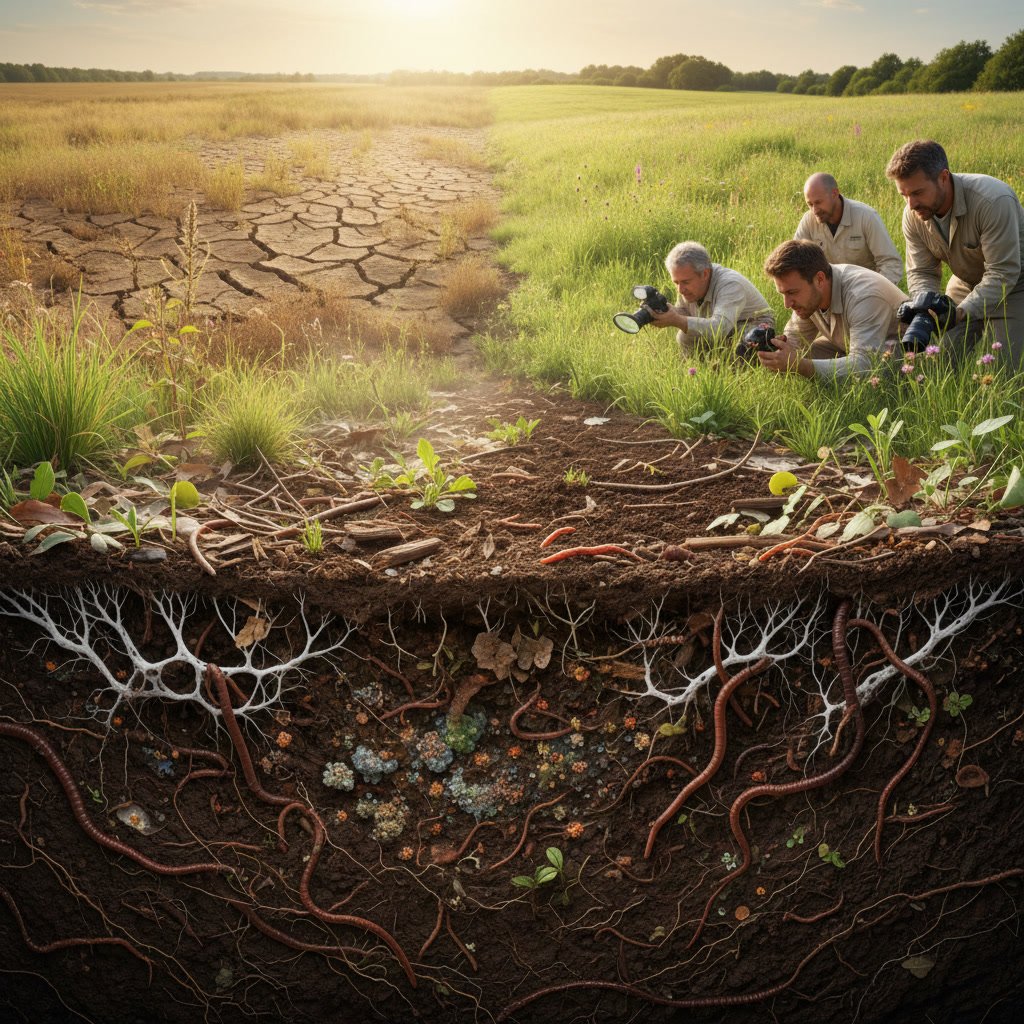
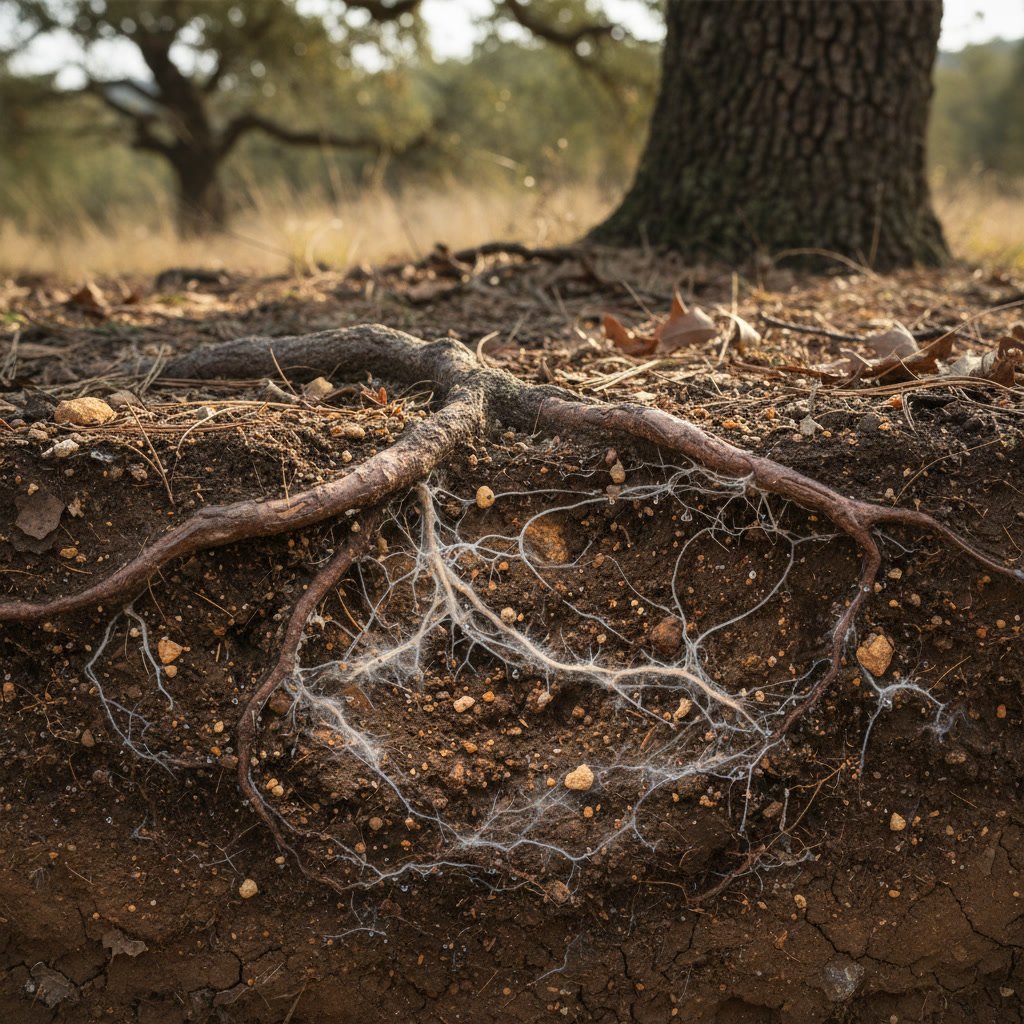
Soil moisture retention depends on three biological components: fungal networks, organic matter decomposition, and soil aggregation. Mycorrhizal fungi extend thread-like structures called hyphae that act as microscopic sponges, holding moisture in the spaces between soil particles. These networks can extend 100 times farther than roots alone, effectively multiplying the moisture-gathering surface area available to each tree.
Active decomposition of organic matter by bacteria and other microorganisms creates stable humus, a carbon-rich substance that holds water like a reservoir. One gram of humus can hold up to eight grams of water. When rebuilding biology restores these microbial populations, soil transitions from a mineral substrate that sheds water to a living sponge that stores it.

The Connection Between Soil Compaction and Moisture Loss in San Diego County
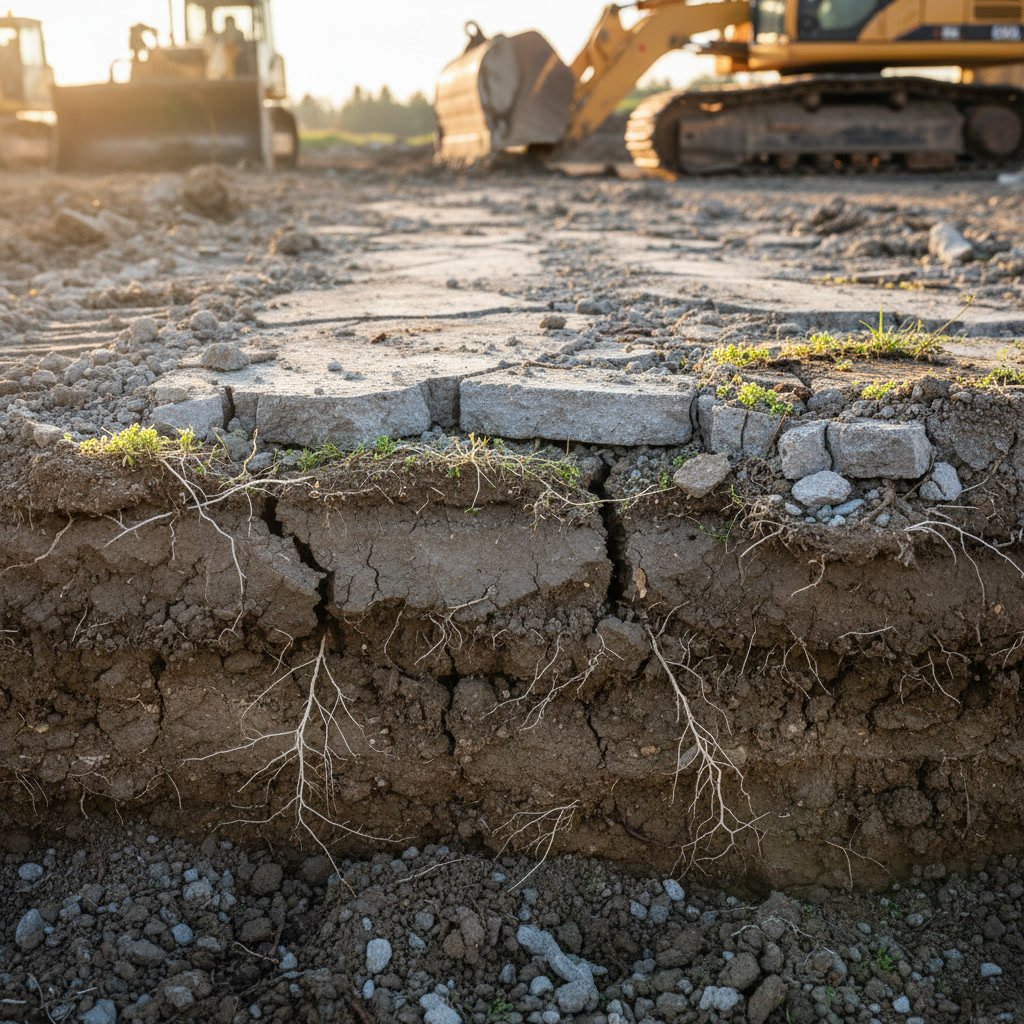
Compacted soil eliminates the pore spaces where air, water, and biology reside. In San Diego County, clay-heavy soils and high foot or vehicle traffic around established trees create layers so dense that water pools on the surface instead of infiltrating. Tree roots suffocate in the compacted zone, unable to access oxygen or moisture. When fire season arrives, these trees have shallow, weak root systems with no capacity to draw from deeper moisture reserves.
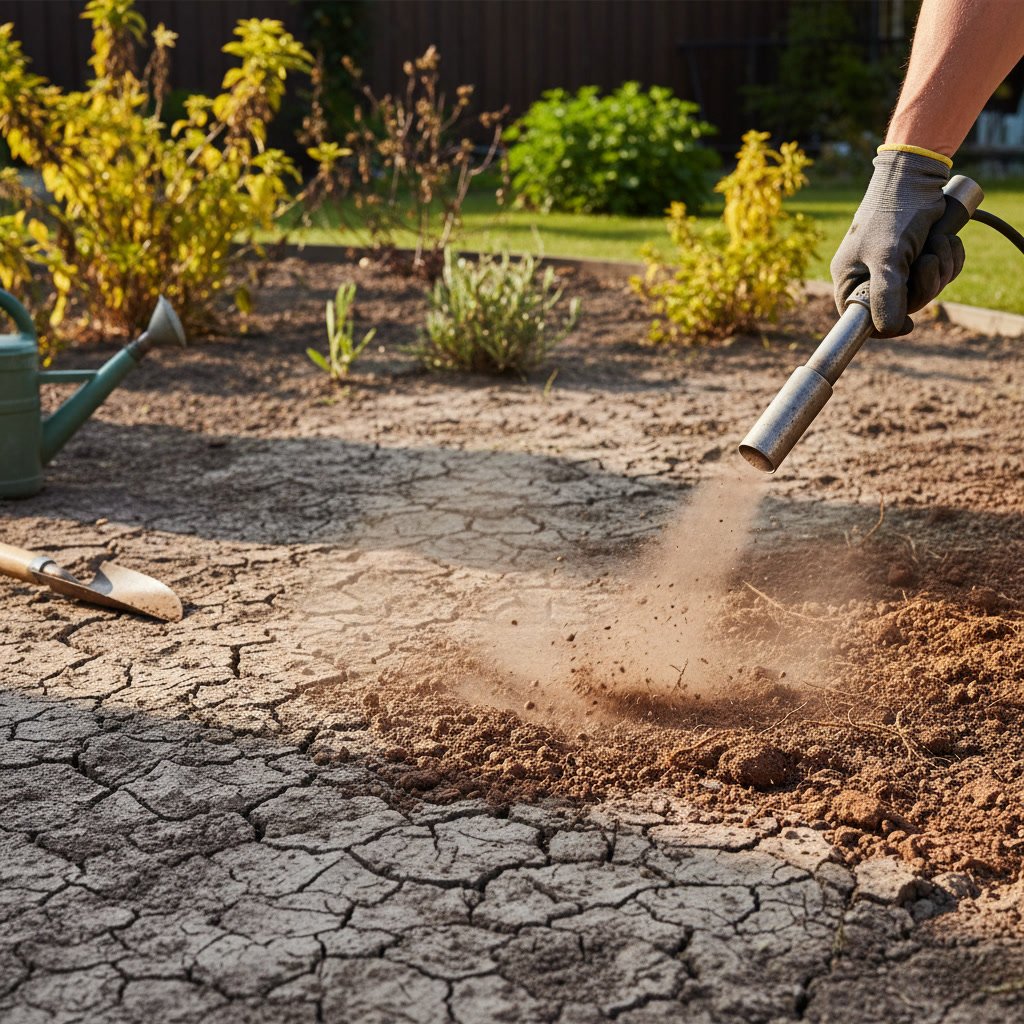
Decompaction techniques that introduce air and restore pore space allow biology to re-establish. Fungal hyphae and root exudates then work together to create soil aggregates, small clumps of mineral and organic particles bound by biological glues. These aggregates are the foundation of soil structure, creating the channels and voids where water moves and rests instead of running off.
Three Steps to Rebuild Biology for Maximum Moisture Storage
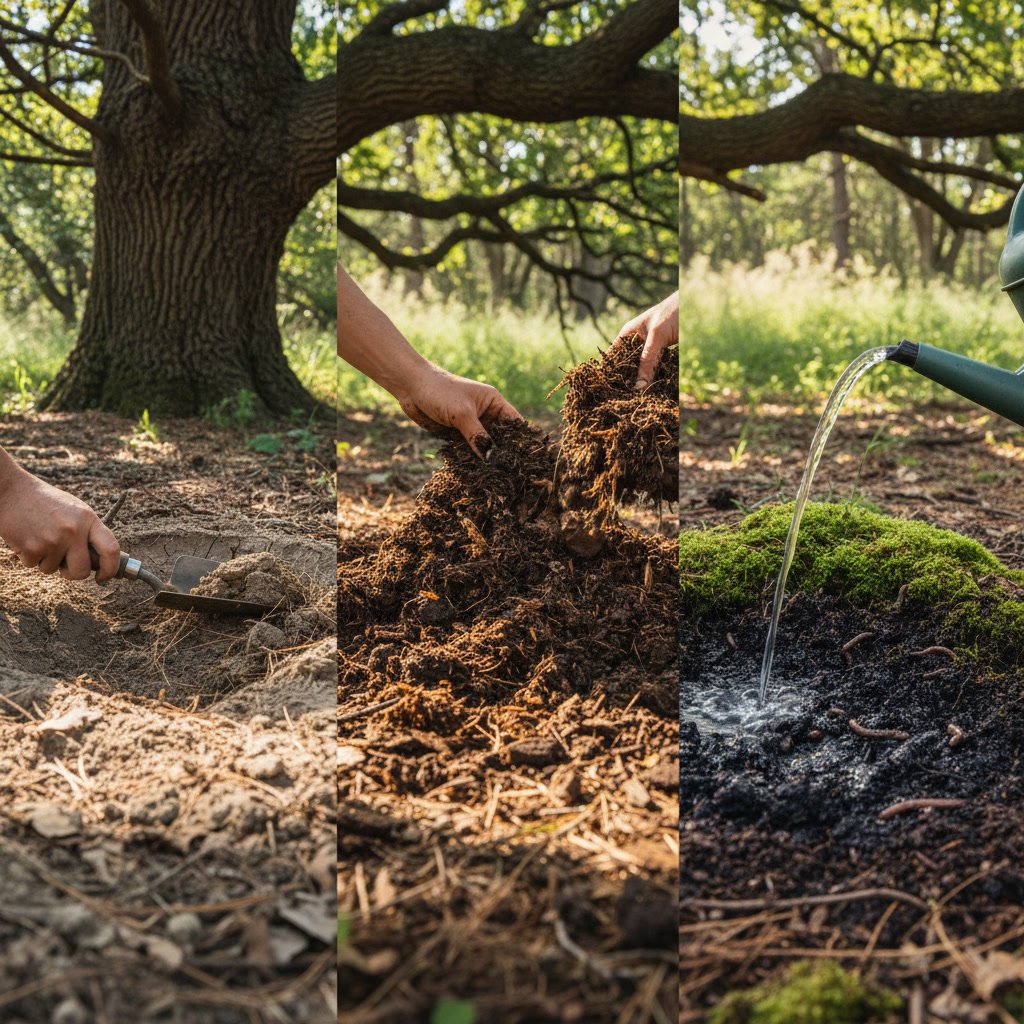
First, assess current soil conditions. Dig a small test hole near the drip line of your tree and examine the soil structure. Healthy soil should have visible aggregates, a pleasant earthy smell, and noticeable root density. If the soil is uniform, hard, or smells sour, biology is compromised.
Second, introduce microbial inoculants and fungal spores tailored to your tree species and soil type. Not all biology is equal. Native fungi that co-evolved with oaks, for example, perform differently than those suited to palms or ornamental species. Targeted inoculation accelerates recovery, especially when paired with quality compost that provides food for emerging microbial populations.
Third, maintain the environment biology needs to thrive. This means avoiding synthetic fertilizers that disrupt microbial communities, reducing soil disturbance, and applying organic mulch that feeds decomposers. Biology is not a one-time fix. It requires ongoing management to sustain moisture-retention capacity year after year, especially in regions with prolonged dry seasons.
How Deep Root Zones Store Fire Season Moisture Reserves
Shallow roots dry out within days during hot, dry conditions. Deep roots, those extending three feet or more below the surface, access moisture that remains stable even when surface soil turns to dust. Healthy soil biology encourages roots to grow deeper by providing the oxygen, nutrients, and water they need at greater depths. Trees with robust deep root systems pull moisture from reserves that shallow-rooted, biologically stressed trees cannot reach.
Encouraging deep rooting before fire season begins is a proactive strategy that pays immediate dividends. Deep roots also anchor trees more firmly, reducing wind-throw risk during the Santa Ana events that often accompany fire danger. Property owners in areas like Escondido and Valley Center benefit from this dual protection, since these inland zones experience both fire risk and high winds.
Why Standard Irrigation Cannot Compensate for Failed Biology
Irrigation systems deliver water to the soil surface or root zone, but they cannot force soil to hold that water. When biology fails, water moves through the soil profile too quickly, bypassing roots and draining into deeper layers or running off entirely. This is why many property owners notice their trees declining despite regular watering. The irrigation system is compensating for a biological problem it cannot solve.
Restoring biology reduces irrigation dependency. Trees with access to biologically rich soil require 30 to 50 percent less supplemental water because the soil captures and stores moisture from each irrigation cycle. During fire season, this efficiency can mean the difference between a tree that remains hydrated and resilient versus one that enters fatal drought stress.
The Role of Mycorrhizal Fungi in Drought Resilience
Mycorrhizal fungi form symbiotic partnerships with tree roots, extending the root system’s effective reach by orders of magnitude. In exchange for sugars the tree produces through photosynthesis, fungi deliver water and nutrients the tree cannot access alone. This partnership is ancient, dating back hundreds of millions of years, and it remains the most efficient moisture-delivery system in nature.
When soil biology collapses, mycorrhizal networks die off. Trees lose their primary mechanism for moisture uptake, forcing them to rely solely on their physical roots. Rebuilding these fungal networks restores drought resilience almost immediately. Within weeks of proper inoculation and soil management, fungal hyphae begin re-colonizing the root zone, and trees regain access to moisture reserves that were previously unavailable.
Comparing Biological Restoration to Surface Mulching
Surface mulch reduces evaporation and moderates soil temperature, both valuable during fire season. However, mulch alone cannot rebuild the internal soil structure that stores moisture. A four-inch layer of mulch might reduce evaporation by 20 percent, but restoring soil biology can increase the soil’s water-holding capacity by 200 percent or more. The two strategies work best in combination, with mulch protecting the surface while biology strengthens the root zone below.
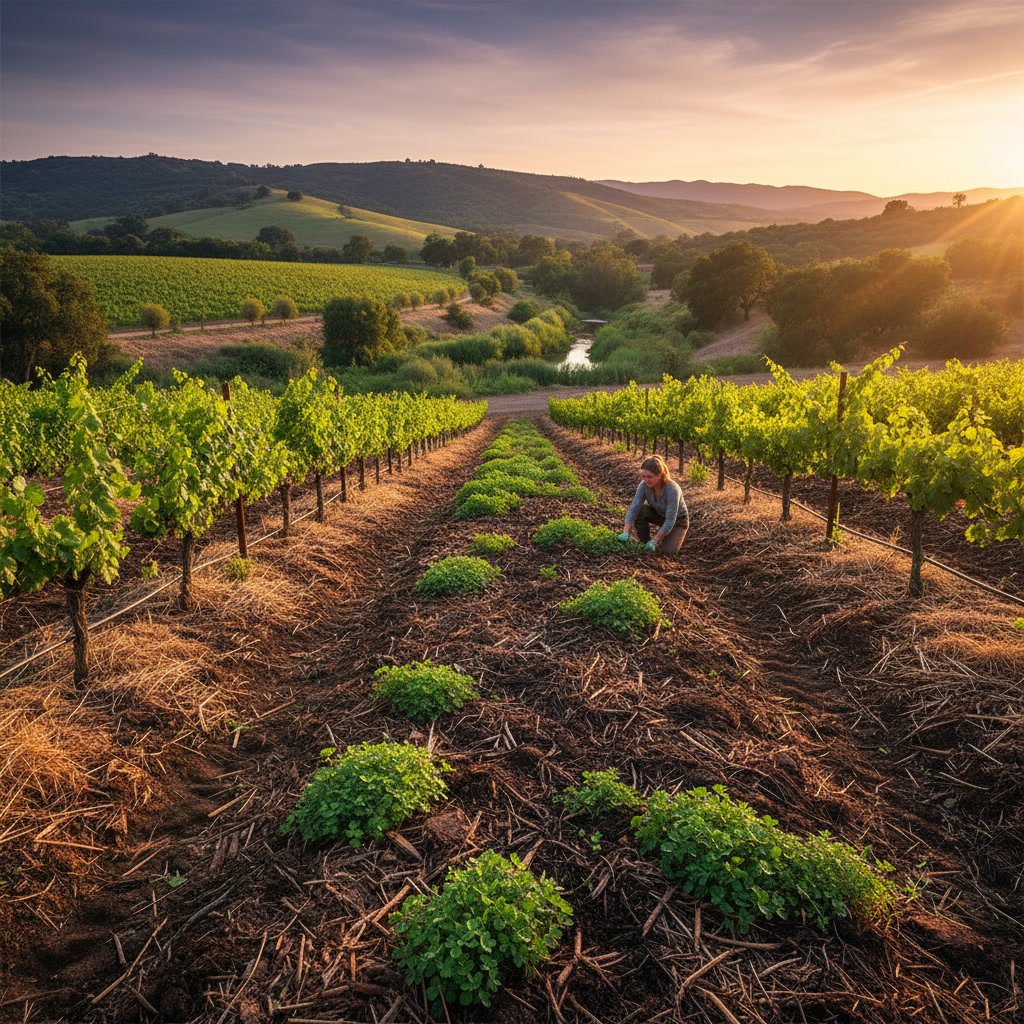
Many property owners apply mulch and stop there, missing the deeper opportunity. Mulch feeds surface biology, which is important, but it does not address compaction, fungal networks, or deep-root moisture access. Expert plant health care integrates both approaches, using mulch as one tool within a broader biological restoration strategy.
What Property Owners Should Do Before Fire Season Begins
Start soil restoration at least 90 days before peak fire season. Biology takes time to establish, and the moisture-retention benefits compound as microbial populations grow and fungal networks expand. Waiting until fire danger is imminent leaves trees vulnerable during the critical window when they need hydration most.
Schedule a soil assessment to identify compaction, pH imbalances, and biological deficiencies. Testing reveals which interventions will deliver the fastest results. For example, soils with low organic matter respond quickly to compost applications, while compacted soils benefit more from mechanical decompaction followed by biological inoculation. Property owners who understand how soil biology rebuilding works can prioritize the interventions that match their specific conditions.
Monitor moisture levels throughout the dry season. Soil moisture sensors placed at different depths reveal whether your trees are accessing deep reserves or relying only on surface irrigation. Adjust your restoration plan based on real data, not assumptions. Trees in Poway face different soil conditions than those in coastal zones, and customized approaches deliver better outcomes.
Building Long-Term Fire Resilience Through Soil Health
Fire season is annual, but soil health is a long-term investment. Trees protected by robust biology withstand not only seasonal drought but also the cumulative stress of climate variability, pest pressure, and soil degradation. Each year that biology improves, trees grow stronger root systems, denser canopies, and thicker bark. Over time, this creates a landscape naturally resistant to fire ignition and spread.
Property owners who commit to ongoing biological management see compounding returns. The first year brings noticeable moisture retention improvements. By the third year, trees show measurable increases in growth rate, pest resistance, and drought tolerance. By the fifth year, the soil ecosystem becomes self-sustaining, requiring only maintenance inputs rather than intensive intervention. This trajectory transforms fire season from a yearly crisis into a manageable seasonal condition.
Protecting Your Trees Starts Below the Surface
Fire season preparedness extends far beyond clearing brush and watering more often. The most effective protection comes from rebuilding the living soil ecosystem that keeps established trees hydrated, resilient, and healthy year-round. Soil moisture retention biology is not a luxury or an abstract concept. It is the foundation of drought tolerance and fire resistance in every mature tree.
SD SOIL AND SOUL LLC specializes in science-based soil restoration that delivers measurable improvements in tree health and moisture retention. If your established trees need protection before the next fire season, or if you want to understand the specific biology challenges in your soil, reach out to discuss a customized restoration plan. Call (760) 935-PALM to schedule a consultation and start building long-term resilience into your landscape.